
Marrakech is a generally safe city for visitors, and the problems people actually run into are commercial rather than criminal: persistent selling, unofficial guides, and taxi fares quoted well above the meter. Serious crime against tourists is not the common experience. Being worn down by hassle, on the other hand, is something many first time visitors do experience, and it is largely avoidable once you know the patterns.
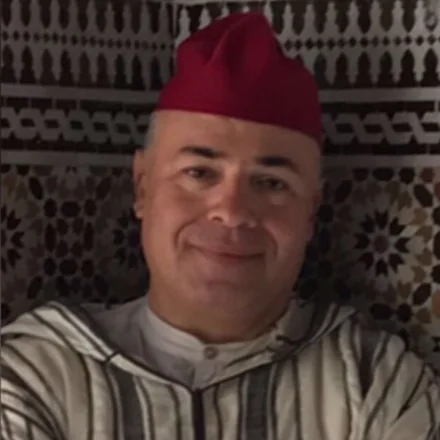
Ben has walked visitors through this city for decades and hears the same handful of stories. Here is what they are, and what to do.
The everyday reality
The medina is a dense, busy, working neighborhood. There are mopeds in lanes barely wide enough for two people, there are handcarts, there are donkeys, and everyone moves at once. That takes adjustment, but it is not danger. Step to the side, let things pass, and do not try to hold your line.
Petty theft is the realistic risk, mostly pickpocketing in the crush at Jemaa el-Fnaa and in the tightest souk lanes. The standard precautions are the right ones:
- Bag zipped and worn in front, not on a shoulder behind you.
- Phone out of a back pocket, especially in the evening crowds.
- Cash split between two pockets rather than all in one place.
- A photo of your passport on your phone, the original in the riad safe.
- The riad’s name and a nearby landmark written down, since a lane address on its own is not much help to a taxi driver.
Common hassles and how to end them
The unofficial guide. Someone falls in beside you and says the way you are going is closed, or that the square is this way, or that the tanneries are open today. Following ends in a shop or a request for payment, sometimes an aggressive one.
The response that works is a warm, firm “la, shukran,” no thank you, without breaking stride. Do not argue, do not explain, do not get drawn into a conversation, and do not follow. It is not rude. It is the normal local response.
The closed road. A variation of the above. The souks are essentially never closed, and Jemaa el-Fnaa is never moved.
Henna. A woman may take your hand and start applying henna before you have agreed to anything, then ask for payment. If you do not want it, keep your hands down and say no clearly.
Photographs with animals or performers. At Jemaa el-Fnaa, snake charmers, monkey handlers and musicians earn from photographs. If you take one, you pay, and the amount will be negotiated after the fact, which is uncomfortable. Decide before you raise the camera. Our Jemaa el-Fnaa guide covers the etiquette in full.
The tanneries. The classic route: a stranger walks you there, gives you a sprig of mint, shows you the vats, and then you are in a leather showroom with a large bill for the guiding. Go with someone you arranged in advance, or do not go.
Broken meter. See below.
Taxis, and how they work
Petit taxis are the small city taxis, beige in Marrakech, and they operate only within the city. They carry up to three passengers. They have meters and are supposed to use them. Many drivers will quote a flat price to visitors instead, usually several times the metered fare.
What to do: ask for the meter, “compteur,” before getting in. If the driver says no, either agree a fixed price before you set off or wave the next one over. There are many taxis. Carry small notes, since change is often an issue.
Grands taxis are the larger, older sedans that run longer distances and between cities, and they are often shared, with the fare split by seat. They do not use meters, so you agree the price beforehand.
Ride hailing apps exist in Morocco and their coverage changes, so check what is working at the time of your visit rather than assuming.
Calèches are the horse drawn carriages, priced by the hour, used for a circuit of the walls and the gardens rather than as transport. Agree the price and the route first.
Note that no vehicle can take you to most riad doors, because the lanes are too narrow. You will be dropped at the nearest access point. Our guide to what a Moroccan riad is explains how to plan for that with luggage.
Arriving at the airport
Marrakech Menara Airport is close to the city, a short drive from the medina. The arrivals hall is where a lot of visitors have their worst first impression, because taxi pricing there is aggressive.
The simplest solution is to arrange a transfer in advance, through your riad or with us. It costs a known amount, someone is waiting with your name, and you avoid negotiating at the end of a flight. If you do take a taxi from the rank, know that airport runs are often priced at a fixed rate rather than metered, so ask what the fare is before you load bags.
There is an ATM in the arrivals area, and you will want cash immediately, since the dirham is difficult to obtain outside Morocco. Our Morocco travel tips cover money in more detail.
Walking the medina, day and night
By day, walk freely. Get lost on purpose in the middle of the day, when the lanes are full.
By night, stick to the routes that stay busy: around Jemaa el-Fnaa, the main souk arteries in the early evening, and the lanes your riad uses. Residential lanes empty out after dark and become very quiet and very dark. That is a comfort issue more than a crime issue, but it is also where people panic when their phone map fails.
Two practical habits: charge your phone before you go out, and learn one fixed landmark near your riad, a gate, a mosque, a fountain, that any local can point you toward.
How Ben can help
The fastest way to stop worrying about all of this is to spend your first day with someone who lives here. Nobody approaches you when you are walking with a local, the route makes sense, and by the end of the day you have a mental map of the medina that makes the rest of your stay easy.
The Personalized Marrakech Tour is a private day on foot with pickup at your hotel or riad. We also provide affordable transportation for individuals and groups, including airport pickups and drivers for days outside the city, which you can arrange through custom Marrakech tours. If you are arriving late or traveling alone and want to know what to expect, just ask us.
FAQ
Is Marrakech safe for solo female travelers?
Many women travel here alone without trouble, and violent crime against visitors is not the usual issue. Unwanted comments and attention in the street are more common, and most solo women find that dressing modestly, walking with purpose and not engaging works well. Arranging a guide or a driver for evenings is a reasonable extra step.
Do petit taxis in Marrakech use a meter?
They are supposed to, and the meter is the cheapest way to travel. Many drivers will quote a flat fare to visitors instead. Ask for the meter before you get in, and if the driver refuses, agree a price first or take another taxi. Petit taxis carry up to three passengers and stay within the city.
Is it safe to walk the medina at night?
The main lanes around Jemaa el-Fnaa and the busy souk routes stay lively into the evening and are generally fine. Small residential lanes empty out and get very dark, so that is where it is worth taking a taxi to the nearest access point instead. Walk with a phone that has charge and know your riad’s landmark.
What should you do if someone insists on showing you the way?
Say no thank you clearly, keep walking and do not follow. People who volunteer directions in the medina usually expect payment or want to bring you to a shop. If you are genuinely lost, step into a shop and ask the person behind the counter, who has no reason to lead you anywhere.