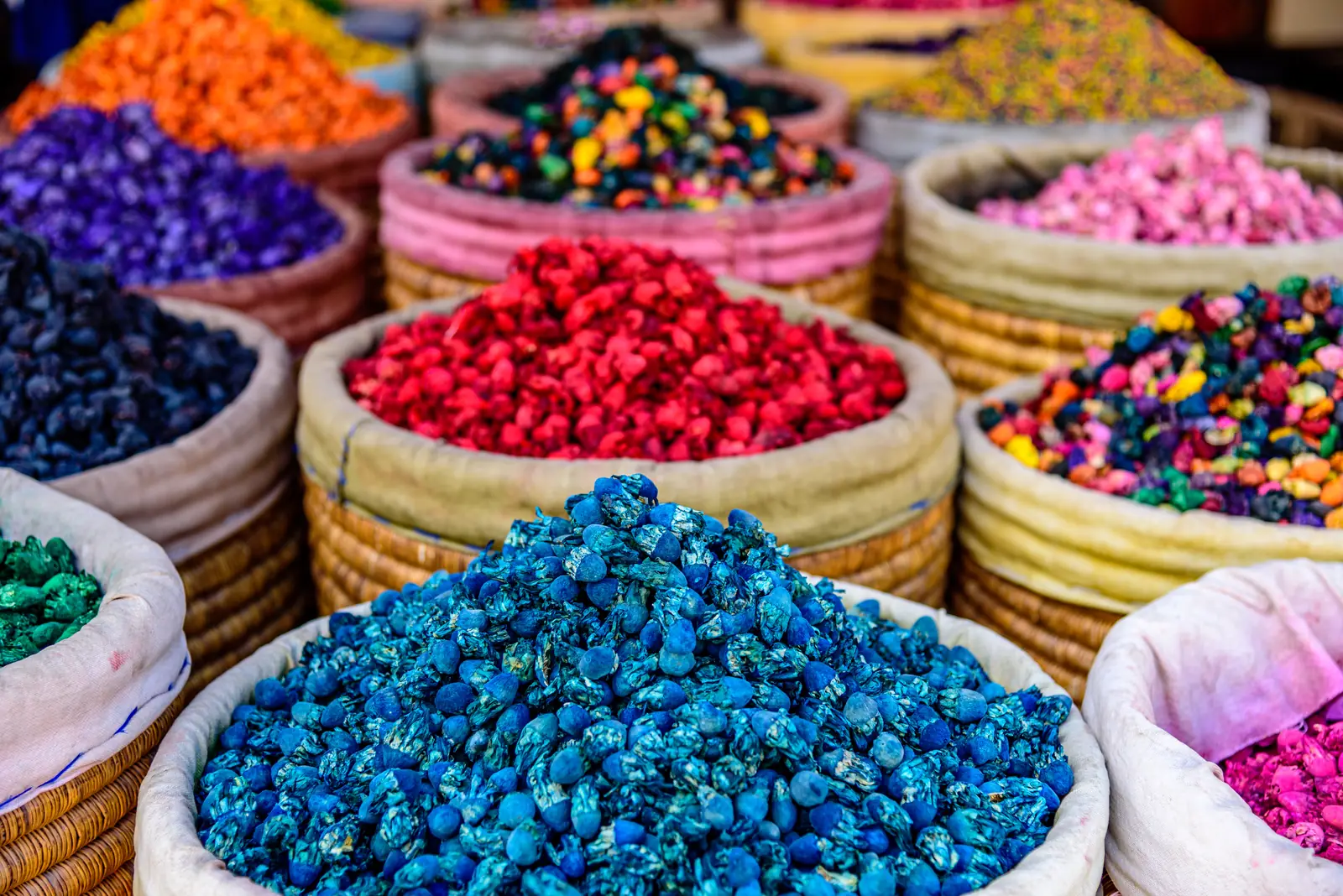
The souks of Marrakech are the covered markets that fill the blocks north of Jemaa el-Fnaa, and they are organized by trade rather than laid out on a grid. Metalworkers are together, leather is together, dyers are together. Once you understand that, the maze becomes readable, and the walk stops feeling like a test.
Ben has been walking these lanes since he was a boy. What follows is the structure he explains to guests on the first morning, plus the practical parts: money, haggling, and how to find your way back out.
How the souks are laid out
The main entrance most people use is at the north end of Jemaa el-Fnaa, where a wide lane leads in under a lattice roof. That is Souk Semmarine, the spine. Fabric, clothing, slippers and general goods line it, and it is the busiest lane in the medina.
From Semmarine the trade souks branch off. The rough order as you go north:
- Rahba Kedima, an open square where apothecaries sell spices, dried herbs, argan oil and cosmetics from the counters around the edge. Rug sellers cluster just off it.
- Souk Attarine, historically the perfume and spice sellers, now mixed with lamps and brass.
- Souk Smata, the slipper makers, where the babouches hang in rows by color.
- Souk Cherratine, leather: bags, belts, poufs, jackets.
- Souk Haddadine, the ironworkers, which you will hear before you see. This is where the pierced metal lanterns are made.
- Souk Chouari, woodturners working olive, cedar and thuya.
- Souk Sebbaghine, the dyers’ lane, where skeins of wool hang overhead to dry.
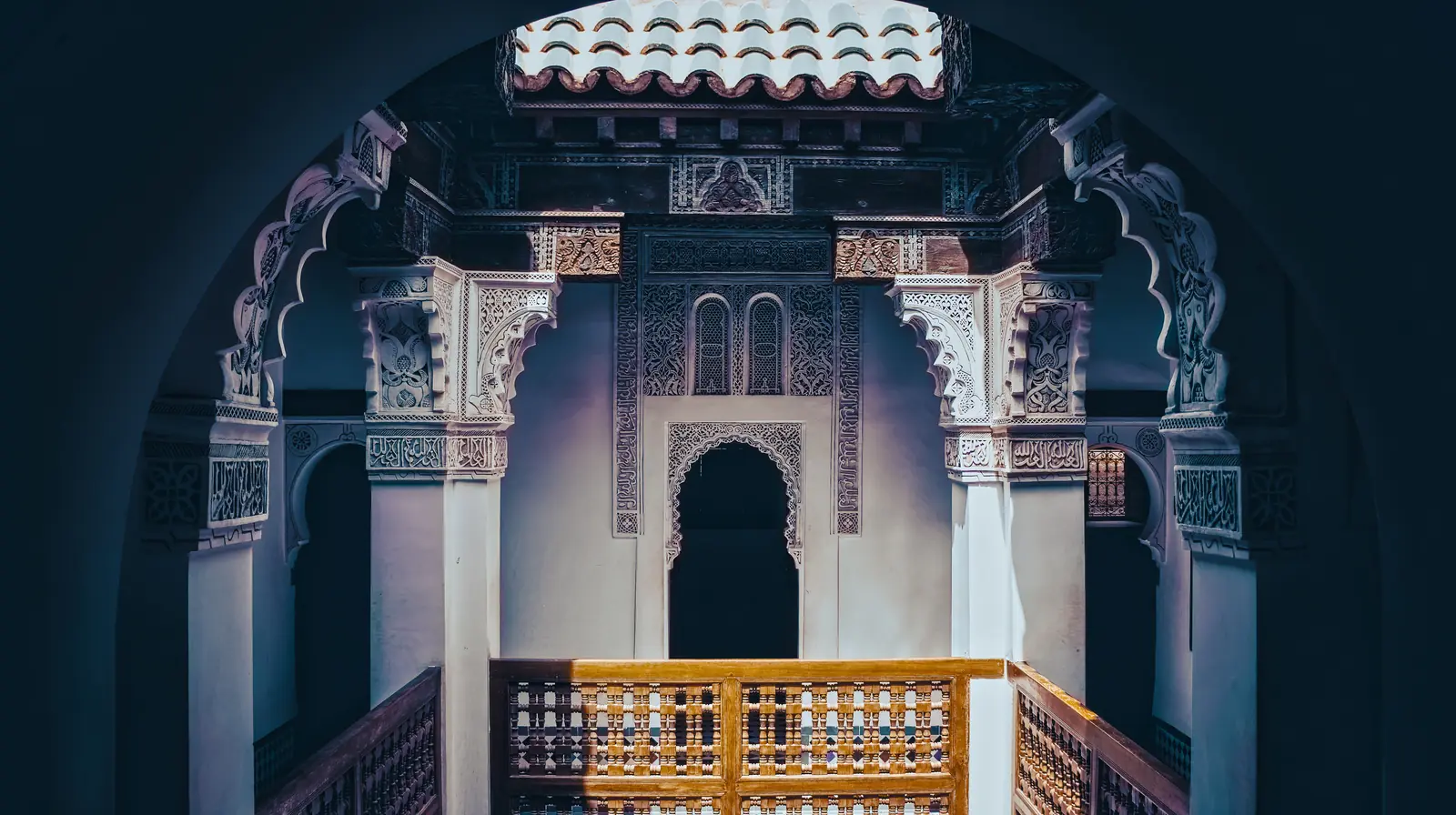
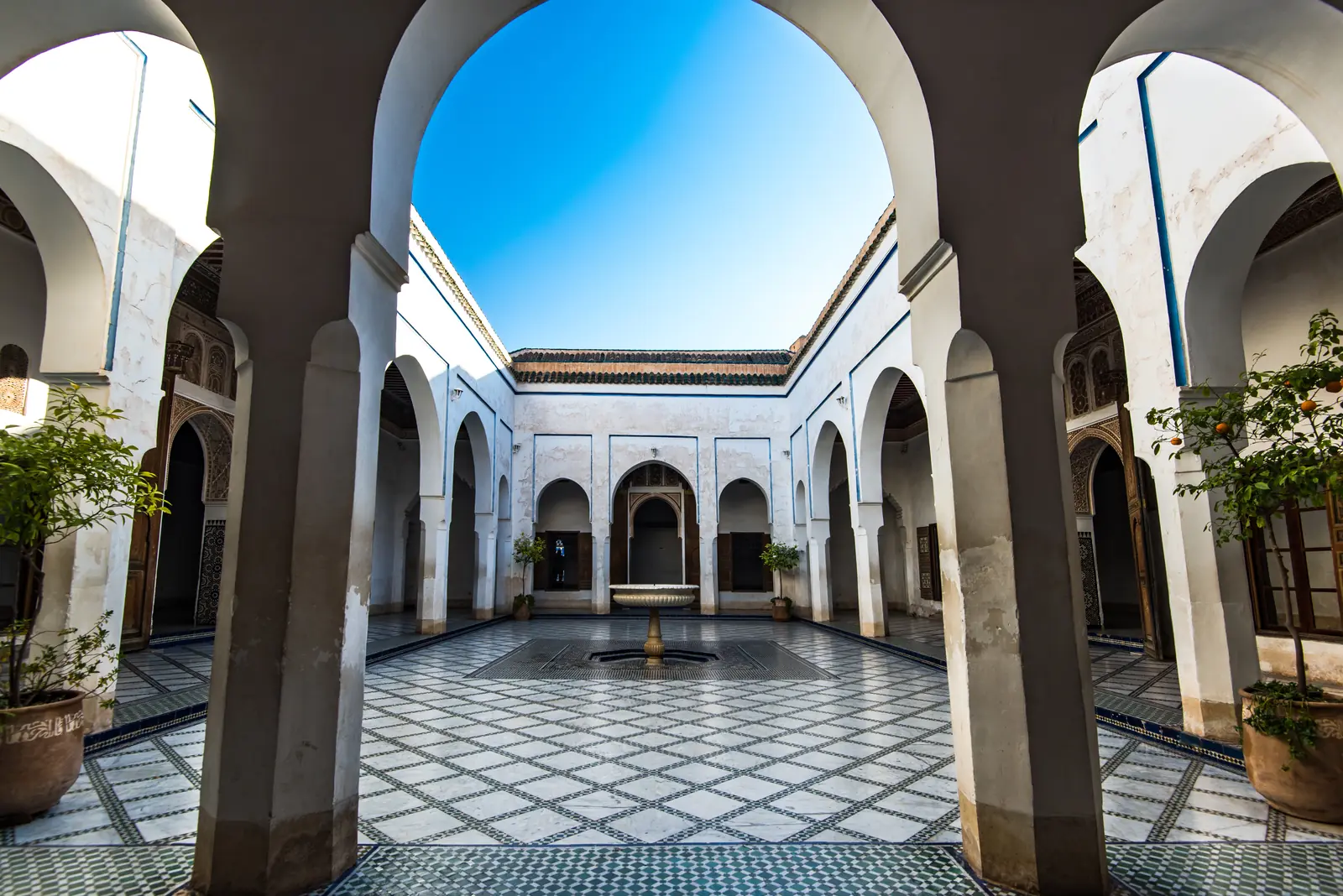
Scattered among them are fondouks, old courtyard buildings that once housed traveling merchants and their animals, now usually workshops. If a doorway opens onto a two story courtyard with balconies, that is a fondouk, and you are generally welcome to look.
What is worth buying, and what to look at
Marrakech is a serious craft city, and the quality range is wide. The same shape of lamp can be hand pierced brass or stamped tin. The same rug shape can be hand knotted wool or machine made.
A few things to check with your hands rather than your eyes:
- Rugs. Turn the corner over. A hand knotted rug shows knots on the back and slight irregularity in the pattern. Wool feels cool and slightly greasy, not squeaky. We go into detail in how to buy a Berber rug in Marrakech.
- Leather. Smell it and look at the edges. Properly finished edges are turned and stitched, not just cut.
- Metal. Pierced work has slightly uneven holes and a burr you can feel inside. Stamped work is perfectly regular.
- Ceramics. Look at the foot of the piece and the glaze inside. Hand painted lines wobble a little.
- Argan oil. Culinary argan is toasted and smells nutty. Cosmetic argan is untoasted and nearly odorless. If a bottle claims to be both, be skeptical.
Haggling, explained plainly
Prices in the souks are not fixed, and the first number is an opening position, not an insult. Neither is your counter. It is a conversation with a structure.
What actually works:
Decide before you speak what the item is worth to you. Not what it is worth in Morocco, which you cannot know on day two, but what you would be happy to pay to have it at home. Open below that. Move in decreasing steps. If you reach your number and the answer is no, thank the seller warmly and walk. Walking away is a normal move in the conversation and nobody takes offense. Sometimes you are called back, sometimes you are not, and both outcomes are fine.
What does not work: haggling hard over something you do not intend to buy, or agreeing a price and then changing your mind. Those are the two things that genuinely annoy merchants.
Mint tea is often offered during a serious negotiation, particularly for rugs. Accepting it does not obligate you to buy. It does mean you have agreed to spend twenty minutes, so accept it when you are actually interested.
How not to get lost
The souks are genuinely confusing, and phone maps are unreliable under the roofing and between tall walls. Three things help.
First, note the sound. Haddadine is loud with hammering. Sebbaghine smells of dye. The square you keep coming back to is probably Rahba Kedima. These are better landmarks than street names.
Second, remember that the medina drains toward Jemaa el-Fnaa. If you keep heading downhill and south, or simply follow the general flow of people in the early evening, you will come out near the square.
Third, if you are properly turned around, ask a shopkeeper rather than someone who approaches you. Shopkeepers have no reason to walk you anywhere. People who offer directions unprompted often expect to be paid, or to take you to a relative’s shop.
When to go
Mid morning is the best combination of open shops and thin crowds. Late afternoon into early evening is the most atmospheric, with the light coming through the slatted roofs, but it is also the busiest. The middle of a summer day is hot even under cover.
Friday runs on a different rhythm because of midday prayers, and it is the traditional couscous day. Many shops open later or close for a stretch. Our first time Morocco travel tips covers Friday and a few other rhythms worth knowing.
How Ben can help
The souks are the part of Marrakech where a local guide makes the biggest difference, and not for the reason people expect. It is not about finding secret shops. It is that Ben knows which workshops actually make what they sell, and the difference between a fair price and a visitor price for a given item on a given day.
The Personalized Marrakech Tour includes the souks as part of a full day through the medina, at whatever pace you want. If you are here specifically to buy, whether that is one lamp or a container of furnishings, our personal shopping service is built for that, including packing and shipping worldwide. And if you would rather eat your way through the medina than shop it, look at the Taste of the Medina food tour, or just tell us what you want and we will put something together.
FAQ
Are you supposed to haggle in the Marrakech souks?
In the souks, yes, for craft goods, rugs, leather, lamps and clothing, where prices are rarely marked. In supermarkets, pharmacies, modern shops in Gueliz and most cafes, prices are fixed and haggling is not appropriate. If an item has a printed price tag, treat it as fixed.
What time do the souks open and close?
Most stalls open in the morning and stay open into the evening, with a quieter stretch around midday. Friday is slower, especially around midday prayers, and some merchants close for part of the day. Hours vary by shop and by season, so treat any schedule you read online as approximate.
Can I pay by card in the souks?
Assume no. Small craft stalls work in cash, in Moroccan dirhams. Larger rug and antique dealers often do take cards, and some accept bank transfer for shipped purchases, but you should carry cash for anything under a few hundred dirhams.
Is it safe to walk the souks alone?
Generally yes, and plenty of visitors do. The common problems are pressure selling and unofficial guides who attach themselves to you, rather than anything dangerous. Our post on safety and getting around covers how to handle both politely.